

The words Pembekal Kurma Malaysia can sound like the name of one shop. They describe a trade: the importers, repackers and wholesalers who stand between a date palm in Madinah, Iran or Tunisia and the tray of kurma on a Malaysian shelf. This post walks through how that trade works for buyers here, and then turns to choosing dates once they are in front of you. An older post on this site is linked here as the best dates; it was written before this guide, and nothing below relies on it.
Every date sold in Malaysia starts abroad
Start with the fact that shapes everything else. Malaysia has no commercial date-growing trade, so every date sold here is imported. A pembekal kurma in Malaysia, whether a big importer or a small reseller, is always handling fruit that was grown and harvested in another country.
FAO's date palm handbook (Plant Production Paper 156) describes the road that fruit takes. After harvest it goes through a packinghouse, where the processes listed are fumigation, washing, storage, refrigeration, hydration, dehydration and curing. Sub-contracted packinghouses usually receive fruit that has already been fumigated and roughly sorted, and FAO notes that these "are not always in the area or country where the fruit is grown". The handbook adds that fruit "may be handed over to be repacked in the countries where it is to be marketed", with the retail packs made up to the customer's requirements.
For a buyer, that boils down to two questions worth asking any supplier: where was this grown, and who packed it? Any supplier worth buying from should be able to answer both. If you are weighing up who to buy from, this site has a longer piece on choosing the right kurma distributor.

Where the varieties on a supplier's list come from
The table below takes the varieties a buyer meets most often under the name kurma and gives the origin each one can honestly be credited with. The last two columns come from one Malaysian wholesaler's price list, checked in November 2026: how many listings of that variety were in stock, and the lowest price per kilo among those in-stock listings.
| Variety | Origin | What it is like | In stock on that list | Lowest in-stock price per kg |
|---|---|---|---|---|
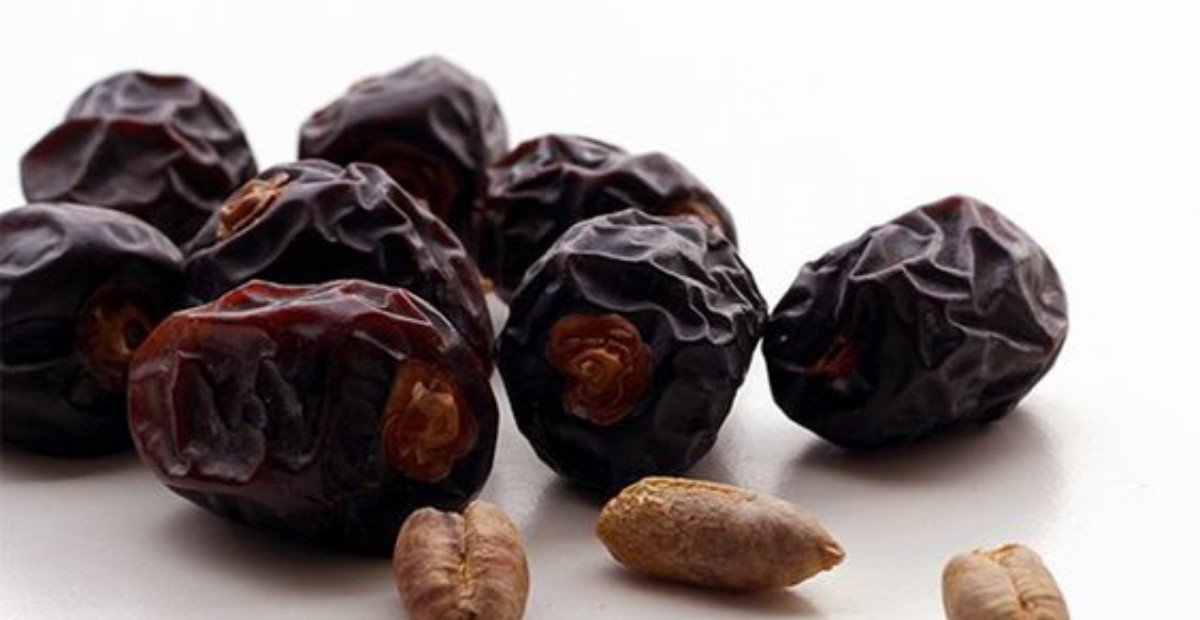
| Ajwa | Madinah, Saudi Arabia | Small, roundish, near-black, finely wrinkled, soft | 5 of 13 listings | RM23.00 (5kg pack, A No.1 Small) |
| Safawi | Madinah region, Saudi Arabia | Longer than Ajwa, dark brown to black, soft and chewy | 7 of 9 | RM16.00 (5kg pack, A No.2 Mini) |
| Mariami | Iran | Dark, semi-dry, chewy | 4 of 9 | RM15.00 (5kg pack, A Normal) |
| Medjool | Originated in Morocco; the listings name Palestine | Large, very soft, rich caramel taste | 5 of 9 | RM56.00 (5kg pack, Premium Jumbo) |
| Deglet Noor | Tunisia / Algeria | Golden, translucent, semi-dry | 1 of 10 | RM18.33 (12 packets of 400g, on the stem) |
| Sukari | Al-Qassim, Saudi Arabia | Golden-amber, very sweet; sold soft or drier | 1 of 1 | RM21.00 (3kg pack, sold as rotab) |
| Mazafati | Bam, Kerman province, Iran | Dark, very soft, high moisture; needs refrigeration | 0 of the 2 listings named Rotab Mazafati or Rotab BAM | None in stock |
| Mabroom | Madinah region, Saudi Arabia | Long and slender, reddish-brown, semi-dry, chewy | 0 of 1 | None in stock |
One point on that Mazafati row. Mazafati is cold-stored and sold year-round, so an empty line on one list on one day tells you about that supplier's stock, not about a season.
The price column is also only a floor. On the same list the dearest in-stock Ajwa was RM44 a kilo (the 1kg AAA VIP Large pack) and the dearest in-stock Medjool was RM77.78 a kilo, for a single 900g box.
Grade letters belong to the supplier
Grades such as A, AA, AAA or Jumbo are each importer's own size sorting. They are not an international standard, and one list shows how much the labels vary. Ajwa labels on it include A No.2 (Mini), A, AA, AAA VIP (Large), VVIP Jumbo and XL Super Jumbo. Safawi uses A No.2 (Mini), A No.1 (Small), A, AA, AAA and Jumbo. Medjool goes by Large, Jumbo, Premium Jumbo and Super Jumbo.
Because each importer sorts to its own scale, an "AA" from one supplier need not match an "AA" from the next. Compare the price per kilo, and ask what the grade means in size before you order a second time. There is a Malay walk-through of exactly this on the site, on membaca senarai stok dan harga borong.
Pack size matters too, and not always in the direction people expect. Among the in-stock Medjool Jumbo listings, the single 900g box worked out at RM77.78 a kilo, the 8 × 900g pack at RM62.22 and the 12 × 500g pack at RM59.17. The biggest pack was not the cheapest per kilo. More on squeezing the most out of a price list is in finding the best wholesale date prices.
What storage does to dates on the way
FAO splits a date's development into five stages: hababouk, kimri, khalal, rutab and tamar. Its comment is blunt: dates in every stage except tamar "are perishable, due to their high water content". Of the soft rutab stage it says that unless the fruit is cold stored it will "quickly turn sour and become of no commercial value". Mazafati, a very soft and high-moisture date, needs refrigeration.
Long storage starts with pest control. FAO says fruit meant to be kept for several months to a year must first be cleared of pests, which is done by fumigation. Methyl bromide was the usual gas, but it was placed under the Montreal Protocol in 1992, and phosphine is named as the main alternative.
Temperature then does the rest. The handbook gives storage figures from research in Tunisia: under more humid conditions dates needed 0°C to last six to eight months, under drier conditions they could be kept for more than a year, and at the dry end they could be stored at 25°C for up to a year. For Deglet Noor in particular, it says the fruit "goes bad quickly (mainly by souring)" in packing and shipment and is best kept at 0 to 4°C.
Picking good dates at the shop
Look at the skin with the variety in mind
A wrinkled date is not a bad date. FAO notes that at the tamar stage the skin of most varieties sticks to the flesh "and wrinkles as the flesh shrinks", and that the colour darkens with time. Ajwa is finely wrinkled by nature. Medjool has its own quirks: loose skin is described as "an aesthetic defect rather than a taste defect", and sugar crystals can form under loose skin. Mould is a different matter, and any pack showing it should stay on the shelf.
Trust your nose
FAO lists alcoholic fermentation from yeast, and souring from bacteria or fungus, among the defects that spoil dates. A pack that smells sour or boozy is worth handing back, whatever the price tag says.
Match the texture to the job
Medjool and Mazafati are very soft. Mariami, Mabroom, Khudri and Deglet Noor sit at the semi-dry end, and Sukari is sold both soft and drier. Which suits you depends on whether the dates are for eating on their own, for a gift tray or for the kitchen.
Read the label
FAO notes that in most importing countries the law requires weight, country of origin, quality and expiry date on the package. If a pack in front of you leaves out the origin, ask. If the staff cannot tell you, take that into account.
Ask the staff about grade and pack
Ask which grade is on the tray and whether the same fruit comes in another pack size. On the list above, the in-stock Medjool Jumbo listings ranged from RM59.17 to RM77.78 a kilo depending on the pack, so the question can be worth real money.
When demand for dates peaks
Demand peaks before and during Ramadan. Hari Raya, weddings (hantaran), kenduri and umrah gifts are other peaks. If you buy for any of those, talk to your pembekal kurma early.
Short answers to common questions
Are any of the dates sold in Malaysia grown here?
No. Malaysia has no commercial date-growing trade, and every date sold here is imported.
Is grade AAA the same at every supplier?
No. Grades are each importer's own size sorting, so compare price per kilo and ask about size.
What does an empty Mazafati line on a price list mean?
Only that the supplier had none in stock when the list was checked. Mazafati is cold-stored and sold year-round.
More about this site is on the About Us page and the contact page.